

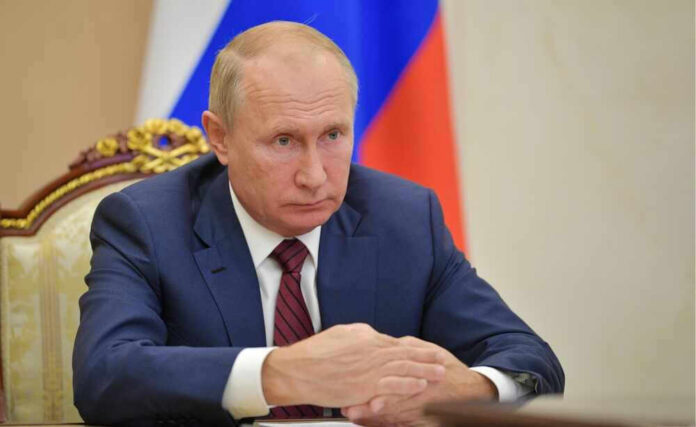
Russia freed 74-year-old American Stephen Hubbard during a visit by President Trump’s envoy, closing a four-year ordeal and igniting new questions about power, leverage, and timing.
Story Snapshot
- Businessman Steve Witkoff confirmed Hubbard’s release during his meeting with Vladimir Putin.
- Putin said Hubbard was taken to Pulkovo Airport in St. Petersburg after his release.
- The State Department had classified Hubbard as wrongfully detained.
- Trump said he raised Hubbard’s case with Putin before Witkoff’s trip.
What Happened And Who Said What
Steve Witkoff met Vladimir Putin and said Russia had released Stephen Hubbard, a retired American teacher from Michigan. The Associated Press and CBS News reported Witkoff’s confirmation. Russian state media carried Putin’s statement that Hubbard was taken to Pulkovo Airport in St. Petersburg after release. Those reports align on the core facts and the sequence. Hubbard’s age, identity, and citizenship appear consistent across outlets, which grounds the account in shared details across the coverage.
Hubbard’s detention began after Russian forces took him in eastern Ukraine in April 2022, according to multiple reports. Russian authorities later tried and convicted him of serving as a mercenary for Ukraine. The U.S. government did not accept that claim and classified Hubbard as wrongfully detained, a move that escalates cases to a higher diplomatic track. That status change often brings in the Office of the Special Presidential Envoy for Hostage Affairs to push for a resolution.
Why He Was Freed Now
Diplomatic timing drove this outcome. President Trump said he raised Hubbard’s case with Putin before Witkoff’s trip. News accounts linked Witkoff’s direct outreach to the final decision, which arrived as he sat down with Russia’s leader. That sequence suggests face-to-face engagement mattered. The public record does not lay out a written bargain or exchange. The reporting ties the release to conversation and pressure, not to a specific trade announced at the table.
Clear lines emerged between Moscow and Washington on the case. Russia’s courts called Hubbard a mercenary. The U.S. State Department called him wrongfully detained. That clash is common in such cases and often reflects each side’s legal framing rather than shared evidence. For American families, the label “wrongfully detained” is not just symbolic. It frees more tools, more senior attention, and more urgency to bring citizens home.
What This Says About Detention As Leverage
Hubbard’s release fits a wider pattern. Governments that clash with the United States often detain Americans, then calibrate releases to gain influence. The pattern also shows the value of steady diplomacy. Cases move when leaders speak directly, envoys travel, and both sides find a way to save face. That is not appeasement; it is realism about how adversaries act and what brings citizens home without paying cash ransoms or making reckless concessions.
🇺🇸🇷🇺 Trump says holding off on new Russia sanctions helped FREE an American imprisoned by Moscow…
POTUS says critics who demanded immediate sanctions have since apologized, because they didn't know he was negotiating for Stephen Hubbard, the 74-year-old American designated as… pic.twitter.com/Y1B5oUk0ZQ
— The17thletter (@john_john017) October 21, 2026
The data track with that view. Reviews of wrongful detentions show that many Americans are held by state actors and that the average case lasts years, not months. That reality demands patience, leverage, and clarity about goals. Protect citizens. Avoid incentives that create more hostages. Keep pressure targeted and constant. That balance is hard, but it is better than loud signals that produce no movement and leave citizens in cells while politicians posture on television.
The Conservative Read: Strength With A Purpose
Results beat speeches. This release shows that direct asks to adversaries, backed by credible leverage, can deliver. American conservative values prize peace through strength, accountability for bad actors, and duty to citizens. The State Department’s wrongful detention label put the case on the right track. The President’s outreach and Witkoff’s meeting closed the loop. Critics may debate optics, but the core test is simple: Did an American come home without surrendering America’s interests? The answer appears to be yes.
What To Watch Next
The immediate question is transit and care. Reports placed Hubbard at Pulkovo Airport after his release, which suggests travel steps were underway. The next markers are consular access, medical checks, and family contact. The larger question is whether this opens the door for other cases. When one case resolves, both sides often explore the next file. This is not a guarantee. It is a window. Smart policy uses it to press for more Americans to come home on firm, fair terms.
Sources:
cbsnews.com, bostonglobe.com, cnn.com, bbc.com, foxnews.com, steptoe.com