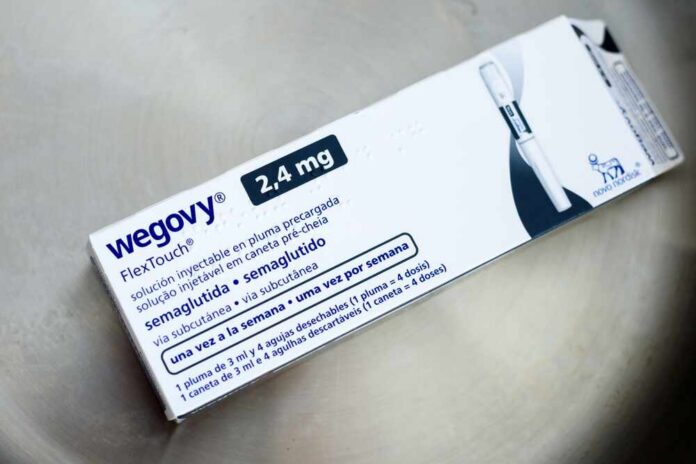
A $49 “copy” of a newly approved Wegovy pill is igniting a legal fight that could decide whether Americans get lower prices through innovation—or through end-runs around FDA safeguards.
Quick Take
- Hims & Hers unveiled a compounded semaglutide pill priced at $49 for the first month, undercutting Novo Nordisk’s new FDA-approved oral Wegovy.
- Novo Nordisk says the product is an unapproved “knockoff” and is threatening legal and regulatory action over safety and intellectual property concerns.
- Analysts say formulation differences could make absorption and side effects unpredictable compared with the approved product.
- The clash highlights a broader market tug-of-war: soaring demand for GLP-1 obesity drugs, high prices, and compounding “loopholes” that expanded during shortages.
Hims launches a compounded pill as Novo threatens litigation
Hims & Hers Health announced it is offering a compounded oral semaglutide pill as part of treatment plans, advertising a $49 first-month price point. Novo Nordisk responded immediately by condemning the rollout and warning it may pursue both legal action and regulatory escalation.
Novo’s position is straightforward: its oral Wegovy is FDA-approved, while the Hims product is not, creating disputes over safety standards and branding protections.
Novo’s statements also frame the dispute as more than a pricing argument. The company describes mass compounding paired with marketing as deceptive, and it argues that patients could be exposed to impurities or doses that have not been tested through the FDA’s approval process.
Hims, for its part, says its pill uses a different formulation and delivery method designed to protect the active ingredient through digestion, a claim that underscores how different “same ingredient” can be in practice.
FDA approval versus compounding loopholes: why the distinction matters
Compounding has traditionally been used to meet individual patient needs, but the GLP-1 boom pushed it into the mainstream during periods of shortage. Over the past year, compounders continued to produce cheaper versions even as regulators warned and manufacturers sued.
This matters because FDA approval is not a label—it is a full evaluation of manufacturing controls, stability, dosing reliability, and safety monitoring. When products are compounded at scale, those guardrails can become harder to verify.
The research also points to a history of scrutiny. The FDA previously warned Hims over advertising tied to GLP-1 knockoffs, a fact that now hangs over the new pill launch as Novo argues consumers may be misled.
For conservative readers who have watched federal agencies apply rules unevenly, the key issue is consistency: if FDA standards are meant to protect patients, the market should not reward workarounds that rely on technicalities rather than transparent validation.
Exclusive: Online telehealth company Hims and Hers Health will begin offering compounded copies of Novo Nordisk's new Wegovy pill at an introductory price of $49 per month, the company said, about $100 less than the brand name https://t.co/TLtqpU9w8N pic.twitter.com/8axXBoUXUt
— Reuters (@Reuters) February 5, 2026
What experts say about “same ingredient” claims and clinical uncertainty
UBS analyst Michael Yee flagged that formulation differences could lead to unclear absorption and side-effect profiles compared with Novo’s product, which has been tested and cleared.
That caution reflects a basic medical reality: oral delivery is complex, and small changes in coating, release, or stability can shift how much drug reaches the bloodstream.
With compounded versions, the uncertainty can increase because the product is not reviewed through the same premarket pathway as the branded drug.
Market shock: stocks drop as the GLP-1 price war intensifies
Investors reacted quickly. Reports tied to the launch said shares of Novo Nordisk and Eli Lilly fell more than 6% following the announcement, while Hims’ stock also swung sharply.
The market response reflects how much revenue is now concentrated in GLP-1 obesity treatments and how sensitive that business is to lower-priced alternatives.
Novo has also warned of slowing 2026 growth, with intensifying competition cited as one of the pressures weighing on the company.
What happens next: court fights, regulatory decisions, and patient risk
The immediate next steps likely center on whether Novo pursues lawsuits to halt sales and whether regulators take action against marketing or compounding practices that resemble mass manufacturing.
The larger policy question is how to balance affordability with safety when demand is enormous and legitimate prescriptions are widespread.
Research estimates put overall prescriptions in the tens of millions, while compounders have filled a much smaller but still meaningful slice—enough to disrupt pricing and confidence.
For patients, the trade-off is not abstract. Lower cost can expand access, but the research underscores unresolved questions about dose reliability and purity when products are not FDA-approved.
For a country trying to rebuild trust in institutions after years of politicized decision-making, this dispute is a test of whether the system will defend clear standards—or allow a race to the bottom that leaves families guessing what they are really swallowing.
Sources:
Novo Nordisk says it will take legal action after Hims & Hers reveals $49 copy of Wegovy pill
Hims & Hers launches copy of Wegovy pill, prompting legal threats
Hims & Hers copies Novo Nordisk’s new Wegovy pill